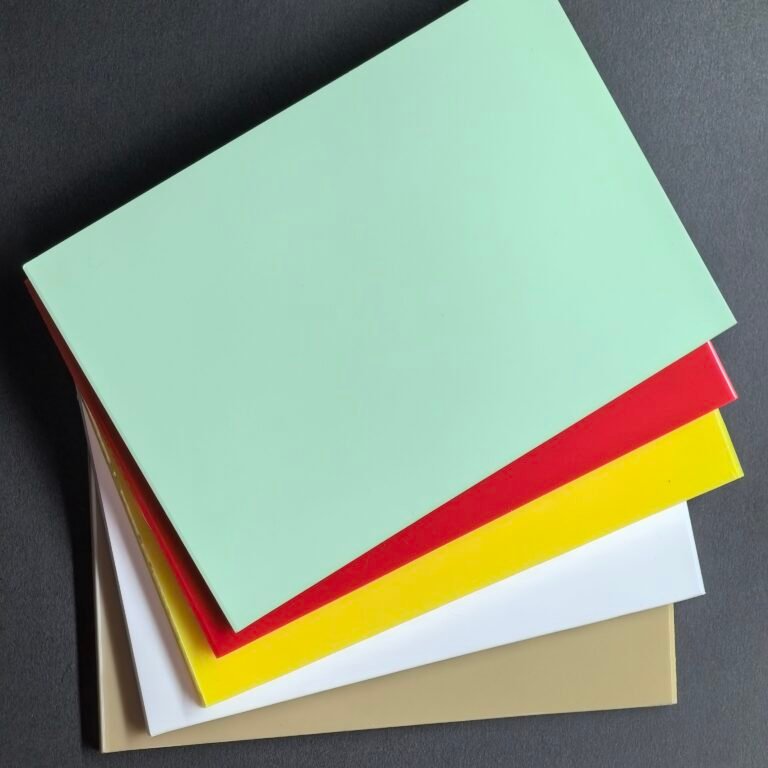
...
Polyethylene Plastic Sheet (PE Sheet) — English Version

English Blog Article — Polyethylene Plastic Sheets (PE Sheets)

By Foshan Mingju Plastic**

What Are Polyethylene Plastic Sheets? A Complete Guide to PE Sheet Performance and Applications


As modern construction and industrial technologies evolve, building materials continue to improve in both performance and versatility. Polyethylene plastic sheets, commonly known as PE sheets, have become one of the most widely used materials in engineering, waterproofing, and protective applications. In this article, Foshan Mingju Plastic will provide a comprehensive overview of what PE sheets are, their chemical characteristics, and where they are used.


1. What Is Polyethylene Plastic Sheet?

Polyethylene (PE) is a widely used thermoplastic resin known for its softness, smooth touch, good transparency, and excellent durability. It is commonly found in daily-use products such as plastic bags, packaging films, and various molded items.

PE sheets are produced by processing polyethylene resin into flat sheet form. Because of their corrosion resistance, toughness, long lifespan, and waterproof properties, PE sheets play an important role in engineering, construction, and industrial applications.

For large-volume procurement or custom dimensions, it is recommended to work directly with a professional manufacturer—such as Foshan Mingju Plastic, specializing in PE, PS, ABS, PP, and PVC sheet production.


2. Chemical Properties of Polyethylene

Polyethylene is well-known for its excellent chemical stability. At room temperature, it is resistant to a wide range of chemicals such as:

  • Hydrochloric acid

  • Hydrofluoric acid

  • Phosphoric acid

  • Formic acid

  • Amines

  • Sodium hydroxide

  • Potassium hydroxide

However, nitric acid and sulfuric acid may cause degradation.

Additional chemical behavior:

  • Susceptible to light and thermal oxidation

  • UV exposure accelerates aging unless UV stabilizers or carbon black are added

  • Radiation may cause crosslinking or chain scission


3. How Polyethylene Is Classified

The performance of PE depends heavily on its polymerization process and molecular structure.

By pressure and polymerization method:

  • HDPE (High-Density Polyethylene):
    Produced under medium pressure with catalysts; linear structure with high molecular weight.

  • LDPE (Low-Density Polyethylene):
    Produced under high pressure; branched molecular structure.

By density:

  • HDPE (High Density)

  • MDPE (Medium Density)

  • LDPE (Low Density)

  • LLDPE (Linear Low Density)

By molecular weight:

  • Low molecular weight

  • Standard molecular weight

  • Ultra-high molecular weight (UHMWPE)

Each type is suitable for different industrial or engineering purposes.


4. Key Features of Polyethylene Plastic Sheets

PE sheets offer multiple advantages that make them a preferred material in engineering and waterproofing applications:

High Strength & Durability

  • Strong tensile strength

  • High hardness

  • Excellent impact resistance

  • Zero water absorption

Excellent Chemical Resistance

Suitable for harsh environments and can replace traditional waterproofing materials like asphalt boards.

Superior Temperature Resistance

Withstands temperatures from -45°C to +80°C, without cracking, warping, or softening.

Long Service Life

Stable structure, aging-resistant, and environmentally friendly.

Strong Bonding Compatibility

When used with polysulfide sealant, PE sheets bond tightly with concrete surfaces, improving waterproofing performance.


5. Applications of Polyethylene Plastic Sheets

PE sheets are widely used across industrial, civil engineering, and construction fields. Common applications include:

  • River embankments and water conservancy projects

  • Ports and dock facilities

  • Underground tunnels and culverts

  • Hydropower station structures

  • Airport construction

  • Bathroom waterproofing

  • Concrete expansion joint waterproofing

  • Vertical, horizontal, or special joint sealing applications

Because of their excellent flexibility and chemical resistance, PE sheets are ideal for various waterproofing and structural protection needs.


About Foshan Mingju Plastic

Foshan Mingju Plastic is a professional manufacturer specializing in plastic sheet production, including:

  • PE (Polyethylene) Sheets

  • PS (Polystyrene) Sheets

  • ABS Sheets

  • PP / PVC Sheets

  • Custom Thermoforming Materials

With advanced production equipment and over 30 years of experience, we provide high-quality sheets for CNC machining, thermoforming, packaging, construction engineering, and industrial applications.

We offer:

✔ Factory-direct pricing
✔ Custom thickness, color, and size
✔ Fast production time
✔ Global export service (India, Middle East, Europe, America)


Conclusion

Polyethylene plastic sheets combine durability, chemical resistance, flexibility, and cost-effectiveness. From construction waterproofing to industrial engineering, PE sheets continue to play a crucial role across many industries.

For high-quality PE sheets or OEM manufacturing, Foshan Mingju Plastic is your trusted partner.
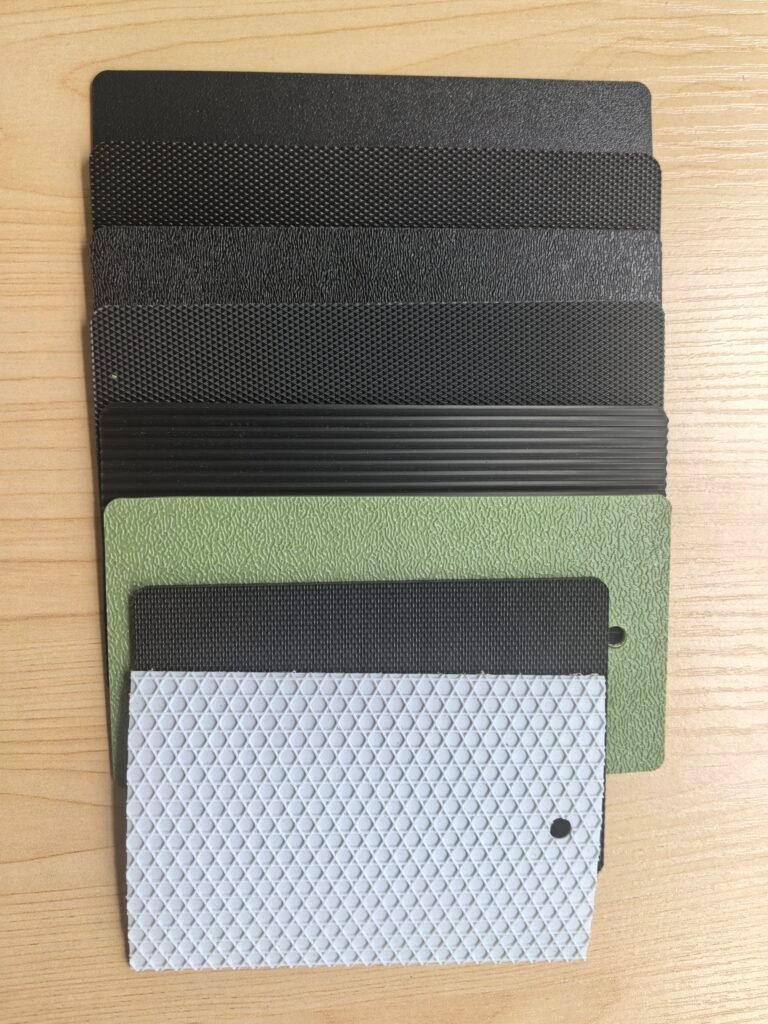
Unlocking the Versatility of ABS Sheets:

Unlocking the Versatility of ABS Sheets: Applications Across Five Major Industries

By MingJu Plastic Co., Ltd.
Email: zhangwuhao1234@gmail.com

Acrylonitrile Butadiene Styrene (ABS) sheet is a high-performance thermoplastic made from three monomers—acrylonitrile, butadiene, and styrene. Known for its toughness, heat resistance, processability, and excellent surface finish, ABS has become a widely adopted material across multiple industries. From consumer electronics to medical devices, its balanced performance and cost advantages make it an ideal alternative to metal, wood, and other traditional materials.

Below, we explore five major industries where ABS sheets deliver exceptional value and practical solutions.


1. Consumer Electronics: Lightweight and Design-Friendly

ABS sheets are commonly used for device housings, brackets, and internal components in smartphones, tablets, laptops, and wearable devices. Their low density helps reduce product weight, while scratch resistance ensures long-lasting aesthetics. ABS also supports a variety of finishing methods—including spraying, printing, and plating—making it suitable for devices requiring stylish or textured surfaces.

Example:
A well-known headphone brand uses ABS sheets for its charging-case structure. With a UV-coated finish and a shock-absorbing internal design, the product achieves durability, attractive appearance, and cost efficiency simultaneously.


2. Automotive Industry: Interior and Functional Components

Automotive interiors demand materials that are durable, safe, and capable of meeting stringent environmental requirements. Modified ABS sheets—with added flame retardants or UV stabilizers—are widely used in dashboards, door panels, air-vent frames, toolboxes, and cup holders.

ABS offers excellent impact strength and supports complex molding designs, making it suitable for curved trims and ergonomic components.

Industry Insight:
A major automaker reported that replacing certain metal interior parts with ABS reduced overall component weight by 30% and tooling costs by 25%.


3. Construction & Interior Decoration: Durable and Aesthetic Solutions

ABS sheets perform exceptionally well in moist or high-traffic environments due to their resistance to water, chemicals, and corrosion. They are often used in bathroom cabinets, kitchen panels, subway seats, hospital partitions, and public facilities.

Through printing, laminating, or co-extrusion, ABS can mimic wood grain, marble, and other decorative surfaces—offering both durability and aesthetic appeal.

Trend:
With the rise of prefabricated and modular construction, ABS sheets are increasingly used in integrated wall systems and ceiling structures due to their lightweight properties and ease of installation.


4. Medical Devices: Functional and Cost-Effective

For non-disposable medical equipment, ABS sheets are ideal for housings, trays, instrument shells, and control panels. Adjusting the butadiene content can improve impact resistance for handheld devices such as glucometers or thermometers.

ABS can withstand sterilization treatments like ethylene oxide without degrading—helping reduce contamination risks in clinical environments.

Note:
Medical-grade ABS must comply with strict safety standards to ensure no harmful substances, such as heavy metals, are released during use.


5. Toys & Educational Products: Colorful, Safe, and Durable

ABS is one of the most widely used materials in the toy industry due to its excellent colorability, toughness, and stability. It is the primary material for building blocks, puzzle parts, model cars, and children’s tableware.

Example:
LEGO bricks are famously made from ABS, relying on precise injection molding to achieve perfect interlocking and consistent quality.

For export-grade toys, ABS must meet international safety standards such as EN71 and ASTM F963, ensuring low levels of phthalates and PAHs.


Conclusion: Partner With a Professional Manufacturer to Maximize Value

From lightweight consumer electronics to durable construction materials, ABS sheets unlock impressive versatility across industries. However, achieving optimal performance requires the right formulation, processing expertise, and quality control.

As a professional manufacturer with strong R&D capabilities and extensive production experience, MingJu Plastic Co., Ltd. provides high-quality ABS sheets and customized thermoforming solutions tailored to your project needs. We offer reliable support from material selection to finished-product delivery—helping your business reduce costs, enhance performance, and accelerate innovation.

📩 Contact us today:
MingJu Plastic Co., Ltd.
Email: zhangwuhao1234@gmail.com

Let us help you explore the full potential of ABS materials and create products that stand out in your market.

ABS SHEETS

Unlocking the Versatility of ABS Sheets: Applications Across Five Major Industries

By MingJu Plastic Co., Ltd.
Email: zhangwuhao1234@gmail.com

Acrylonitrile Butadiene Styrene (ABS) sheet is a high-performance thermoplastic made from three monomers—acrylonitrile, butadiene, and styrene. Known for its toughness, heat resistance, processability, and excellent surface finish, ABS has become a widely adopted material across multiple industries. From consumer electronics to medical devices, its balanced performance and cost advantages make it an ideal alternative to metal, wood, and other traditional materials.

Below, we explore five major industries where ABS sheets deliver exceptional value and practical solutions.


1. Consumer Electronics: Lightweight and Design-Friendly

ABS sheets are commonly used for device housings, brackets, and internal components in smartphones, tablets, laptops, and wearable devices. Their low density helps reduce product weight, while scratch resistance ensures long-lasting aesthetics. ABS also supports a variety of finishing methods—including spraying, printing, and plating—making it suitable for devices requiring stylish or textured surfaces.

Example:
A well-known headphone brand uses ABS sheets for its charging-case structure. With a UV-coated finish and a shock-absorbing internal design, the product achieves durability, attractive appearance, and cost efficiency simultaneously.


2. Automotive Industry: Interior and Functional Components

Automotive interiors demand materials that are durable, safe, and capable of meeting stringent environmental requirements. Modified ABS sheets—with added flame retardants or UV stabilizers—are widely used in dashboards, door panels, air-vent frames, toolboxes, and cup holders.

ABS offers excellent impact strength and supports complex molding designs, making it suitable for curved trims and ergonomic components.

Industry Insight:
A major automaker reported that replacing certain metal interior parts with ABS reduced overall component weight by 30% and tooling costs by 25%.


3. Construction & Interior Decoration: Durable and Aesthetic Solutions

ABS sheets perform exceptionally well in moist or high-traffic environments due to their resistance to water, chemicals, and corrosion. They are often used in bathroom cabinets, kitchen panels, subway seats, hospital partitions, and public facilities.

Through printing, laminating, or co-extrusion, ABS can mimic wood grain, marble, and other decorative surfaces—offering both durability and aesthetic appeal.

Trend:
With the rise of prefabricated and modular construction, ABS sheets are increasingly used in integrated wall systems and ceiling structures due to their lightweight properties and ease of installation.


4. Medical Devices: Functional and Cost-Effective

For non-disposable medical equipment, ABS sheets are ideal for housings, trays, instrument shells, and control panels. Adjusting the butadiene content can improve impact resistance for handheld devices such as glucometers or thermometers.

ABS can withstand sterilization treatments like ethylene oxide without degrading—helping reduce contamination risks in clinical environments.

Note:
Medical-grade ABS must comply with strict safety standards to ensure no harmful substances, such as heavy metals, are released during use.


5. Toys & Educational Products: Colorful, Safe, and Durable

ABS is one of the most widely used materials in the toy industry due to its excellent colorability, toughness, and stability. It is the primary material for building blocks, puzzle parts, model cars, and children’s tableware.

Example:
LEGO bricks are famously made from ABS, relying on precise injection molding to achieve perfect interlocking and consistent quality.

For export-grade toys, ABS must meet international safety standards such as EN71 and ASTM F963, ensuring low levels of phthalates and PAHs.


Conclusion: Partner With a Professional Manufacturer to Maximize Value

From lightweight consumer electronics to durable construction materials, ABS sheets unlock impressive versatility across industries. However, achieving optimal performance requires the right formulation, processing expertise, and quality control.

As a professional manufacturer with strong R&D capabilities and extensive production experience, MingJu Plastic Co., Ltd. provides high-quality ABS sheets and customized thermoforming solutions tailored to your project needs. We offer reliable support from material selection to finished-product delivery—helping your business reduce costs, enhance performance, and accelerate innovation.

📩 Contact us today:
MingJu Plastic Co., Ltd.
Email: zhangwuhao1234@gmail.com

Let us help you explore the full potential of ABS materials and create products that stand out in your market.

Polycarbonate (PC) – Properties, Processing, and Applications
olycarbonate (PC) – Properties, Processing, and Applications
 
Polycarbonate (PC) is a high-performance polymer containing carbonate groups in its molecular chain. Based on ester group structure, it can be classified into aliphatic, aromatic, and aliphatic-aromatic types. Among the five major engineering plastics, PC is currently the fastest-growing general-purpose engineering material.
 
 
Advantages and Disadvantages of PC
 
PC is colorless, transparent, heat-resistant, impact-resistant, and inherently flame-retardant (UL94 V-0 without additives). It has excellent mechanical properties within normal temperature ranges, a high refractive index, and good processability.
 
However, PC has limitations:
•Low hydrolysis resistance
•Notch sensitivity
•Limited resistance to organic chemicals and scratching
•Tendency to yellow under prolonged UV exposure
•Poor wear resistance (surface treatments are required for wear-critical applications)
 
 
Processing Conditions for PC
 
PC is ideal for producing precise, complex-shaped parts that bear light loads or low impact. Processing requires careful control of raw material drying, injection temperature, and mold temperature.
 
1. Raw Material Drying
 
PC is highly sensitive to moisture at high temperatures. Even trace amounts can cause degradation, CO₂ release, discoloration, and reduced performance. Moisture content must be ≤0.02%. Improper drying can lead to defects such as silver streaks, bubbles, or cracks.
 
2. Injection Temperature
 
PC has high thermal stability and a wide molding temperature range, but viscosity is highly temperature-dependent.
•Too low: Poor filling, shrinkage, wrinkles, dull finish
•Too high (>320°C, prolonged): Severe degradation, discoloration, surface defects, bubbles
 
3. Mold Temperature
 
PC has high viscosity and low flowability.
•Too low: Incomplete filling, high shrinkage, surface defects, residual stress
•Too high: Slow cooling, longer cycles, poor release, deformation
 
 
Injection Pressure & Holding Time
 
Holding time affects product density and dimensional stability:
•Too short: Shrinkage, voids, vacuum bubbles
•Optimal: Increased density, stable dimensions
•Too long: High internal stress, cracking risk
 
 
Applications of Polycarbonate
 
PC is widely used in construction, automotive, medical, aerospace, electronics, packaging, and optics.
 
1. Construction Industry
 
PC sheets offer excellent light transmission, impact resistance, UV stability, and processability, outperforming traditional glass.
 
2. Automotive
 
PC’s impact resistance, heat resistance, weatherability, and hardness make it suitable for headlights, dashboards, heater parts, defrosters, bumpers, and PC-alloy components.
 
3. Medical Devices
 
PC withstands steam sterilization, cleaning agents, heat, and radiation without yellowing or losing properties. Applications include dialysis devices, surgical masks, disposable dental tools, blood separators, and high-pressure syringes.
 
4. Aerospace
 
PC is used extensively in aircraft and spacecraft. For example, a Boeing aircraft may contain 2,500 PC parts totaling ~2 tons, including fiber-reinforced PC components and astronaut protective gear.
 
5. Packaging
 
Reusable, sterilizable PC water bottles are common due to their light weight, impact resistance, and transparency.
 
6. Electronics
 
PC’s insulating properties, flame resistance, and dimensional stability make it ideal for tool housings, appliance components, refrigerator drawers, vacuum cleaner parts, and computer/TV parts.
 
7. Optical Lenses
 
Optical-grade PC is widely used for camera, microscope, telescope, projection lenses, laser printer optics, prisms, and mirrors. In eyewear, PC is popular for children’s glasses, sunglasses, safety goggles, and high-performance lenses.
Plastic Waste Recycling and Recovery

Recycling and Regeneration of Plastic Waste: Direct & Modified Reuse Methods

Recycling and reuse of waste plastics is the primary method adopted worldwide for plastic waste recovery, due to its relatively low technical investment and cost. This approach has mature industrial processes in place. Compared with modified regeneration, direct reuse is simpler and more cost-effective, making it the most common method. However, modified regeneration is considered the future development trend as it significantly improves product performance.

1. Direct Recycling (Direct Reuse)

Direct recycling involves sorting, cleaning, crushing, and pelletizing waste plastics before directly molding them into new products. In some cases, additives such as stabilizers, anti-aging agents, and colorants are added to improve processing, appearance, or resistance to aging. However, these additives do not fundamentally improve the mechanical properties of the recycled plastic.

For example, a Japanese construction company processes waste foam plastics by crushing and heating them with infrared radiation, reducing their volume by more than 80%. The material is then mixed with special cement to produce a “rice cracker”–like sound insulation board, offering low-cost, high-efficiency noise reduction for various building applications.

2. Modified Recycling (Performance-Enhanced Reuse)

Modified recycling improves the properties of recycled plastics via mechanical blending or chemical grafting, such as toughening, reinforcing, compounding, particle activation, crosslinking, chlorination, and other chemical modifications. This process enhances performance — especially mechanical strength — enabling the production of higher-grade recycled products. However, it requires more complex processes and specialized equipment.

Almost all thermoplastic waste plastics can be collected, sorted, cleaned, crushed, dried, melted, and then reprocessed into recycled plastic sheets, pipes, rods, components, containers, and more. For instance, banned EPS foam food containers can be cleaned, dried, crushed, defoamed via a single-screw extruder, pelletized, and then blended with LDPE to create LDPE/PS composites with higher tensile strength, improved elongation, and impact resistance — suitable for products like cable cover boards and household items.

3. Chemical Degradation Technologies

Chemical degradation breaks down the polymer chains of waste plastics into monomers or other basic organic raw materials. This process depends heavily on degradation temperature, catalysts, and specialized equipment.

3.1 Depolymerization

Depolymerization returns plastics to monomers or chemical feedstocks via hydrolysis or alcoholysis. This method requires clean waste plastics, removal of additives, and purification of monomers.

3.2 Pyrolysis

Pyrolysis is the thermal decomposition of plastics at high temperatures (above 500°C) in the absence of oxygen.
For example, a German company operates a 10t/day pilot plant that heats mixed waste plastics at 699–800°C for 30 minutes, yielding 35–58% diesel and 23–40% gas. Research from China University of Petroleum shows that pyrolyzing waste polyethylene can produce 50–90% wax, which offers higher economic returns than producing oil.

3.3 Hydrogenation

Hydrogenation involves breaking down plastics under high hydrogen pressure (around 30MPa) at temperatures below 500°C. This produces liquid fuels of lower purity than pyrolysis but can be directly refined in oil refineries. However, it requires strict pre-treatment, separation, and costly equipment.

3.4 Gasification

Gasification degrades waste plastics at extremely high temperatures (up to 1500°C) into CO and H₂ gas, which can then be used to synthesize methanol and other chemical products.

Conclusion

From low-cost direct reuse to high-tech chemical recycling, plastic waste regeneration offers a sustainable pathway for reducing environmental pollution and creating valuable products. As global environmental regulations tighten, modified recycling and chemical recovery technologies will play an increasingly important role in the circular economy of plastics

What is PE Sheet? Features, Applications, and Price
PE sheet, also known as polyethylene board, is widely recognized for its high toughness, tensile strength, corrosion resistance, low-temperature performance, and excellent wear resistance. It is extensively used in industries such as chemical processing, clothing, packaging, food, gas transportation, water supply, sewage treatment, agricultural irrigation, mining, and oilfield operations, as well as telecommunications. In particular, HDPE sheets are extensively applied in gas pipeline systems. However, many people still have only a partial understanding of PE sheets — so, what exactly are they, and are PE sheet prices expensive? Let’s find out.
PE sheet offers excellent resistance to most household and industrial chemicals. Some chemicals, such as strong oxidizing agents (e.g., concentrated nitric acid), aromatic hydrocarbons (e.g., xylene), and halogenated hydrocarbons (e.g., carbon tetrachloride), may cause chemical corrosion, but overall, HDPE demonstrates superior chemical stability. It is non-hygroscopic, has outstanding water vapor barrier properties, and is often used for packaging. HDPE also has excellent electrical properties, particularly high dielectric strength, making it ideal for wire and cable insulation. Medium- to high-molecular-weight grades have exceptional impact resistance, even at extremely low temperatures down to -40°F.
One of the unique strengths of HDPE lies in the balance of four key variables: density, molecular weight, molecular weight distribution, and additives. By adjusting these factors, and using different catalysts, manufacturers can produce HDPE grades tailored for specific performance requirements — achieving the best balance between strength, durability, and processing ease.
PE sheets can also be filled, flame-retardant, modified, or surface-textured (embossed, frosted). LDPE (low-density polyethylene) is softer, has lower mechanical strength and melting point, and is suitable for making films and cable insulation. HDPE (high-density polyethylene) is more rigid, has higher mechanical strength and melting point, and is suitable for hollow products, injection-molded parts, and even ice rink barrier boards. Available thickness ranges from 1mm to 350mm, and colors include natural, white, blue, yellow, gray, black, green, and more.
Production Tips for High-Quality PE Sheets
When manufacturing PE sheets, both raw material selection and processing techniques are crucial. Since polyethylene is an inert polymer with poor melt flow, choosing raw materials with added lubricants (such as stearic acid or metallic stearates) improves moldability and prevents air bubbles.
In processing, precise feed measurement is key — avoid under- or over-feeding. For PE sheets, a higher feed volume combined with high-pressure, fast injection molding produces the most uniform and durable boards. The result is a PE sheet with a smooth finish, no voids, and consistent quality.
weixin
Seraphinite AcceleratorOptimized by Seraphinite Accelerator
Turns on site high speed to be attractive for people and search engines.